
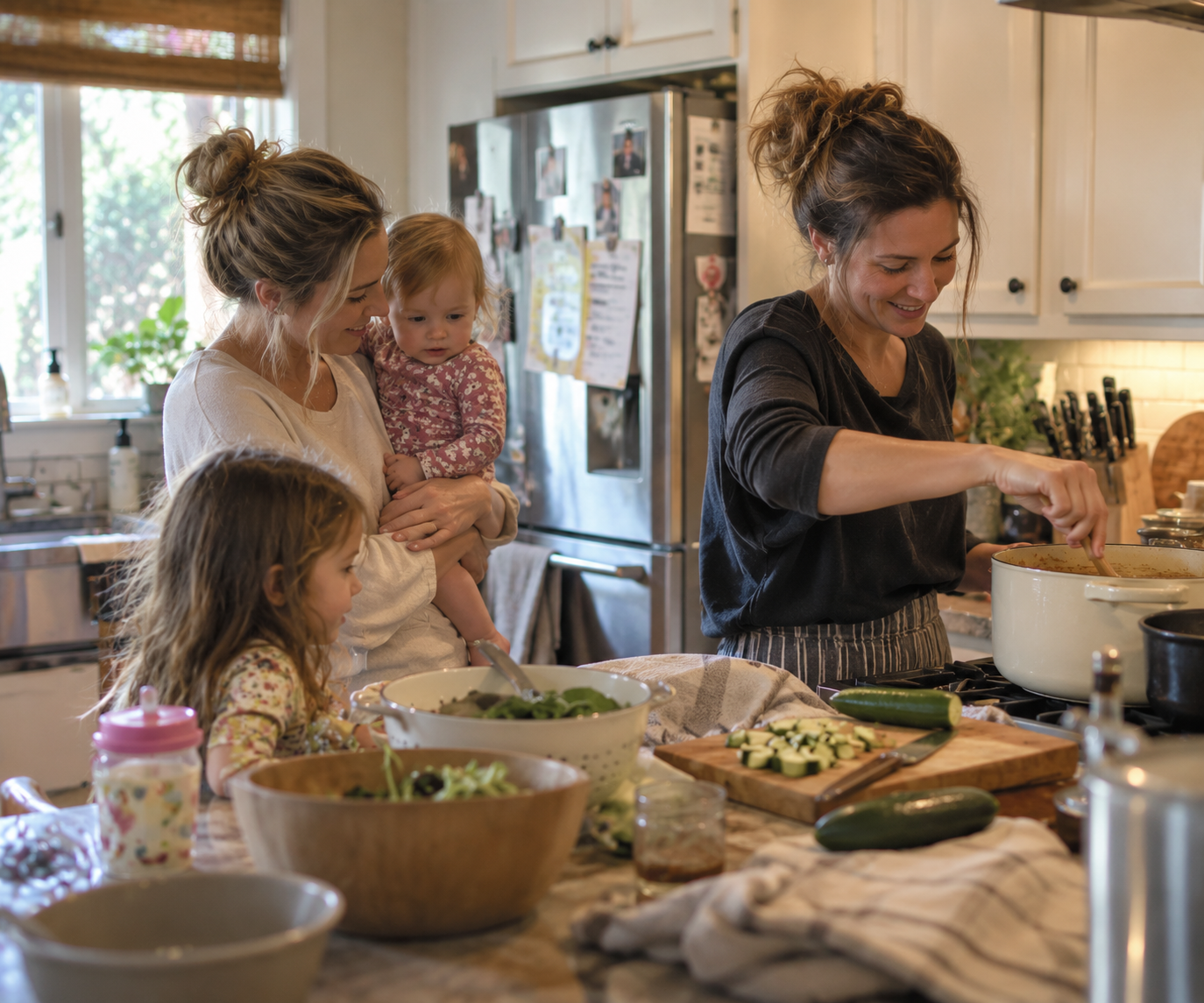

As moms, we often feel guilty when we ask for help because we don’t want to burden or inconvenience anyone. We may even feel ashamed because we think we should somehow “know these things” or “be able to handle this” on our own. After all, we hear all the time that God designed us for motherhood.
And while that’s true, He didn’t design us to do motherhood without help.
God created us for relationship and community. Throughout Scripture, we see people caring for one another, carrying one another’s burdens, encouraging one another, and using their gifts to serve. Motherhood doesn’t remove our need for community; if anything, it makes that need more apparent.
One reason moms sometimes don’t ask for help is because we’re so overwhelmed that we aren’t even sure what we need. After raising three children myself, I’ve noticed that our needs often fall into three broad areas: physical, emotional, and social. They don’t always happen in that order, and every mom’s needs are different, but thinking through these areas can help you identify what kind of support would actually make a difference.
Sometimes the most immediate need is physical. Maybe you’re sleep-deprived, haven’t eaten a decent meal, or haven’t had a shower in two days. Maybe you simply need someone to hold the baby while you close your eyes for twenty minutes. Those things may sound small, but when you’re exhausted, hungry, and caring for everyone else, meeting a basic physical need can change the entire way you feel.
Of course, that’s often easier said than done when there’s a crying newborn or a toddler hanging onto your leg. That’s where having people you can call becomes so valuable. Maybe your mom can come over for an hour. Maybe your husband can take the kids while you nap. Maybe a friend can drop off a meal. Sometimes the help we need isn’t complicated—we just need someone willing to step in for a little while.
Once our physical needs are addressed, we may have a little more room to recognize what’s happening emotionally.
Motherhood comes with a whole range of emotions. There is joy, but there can also be frustration, overwhelm, sadness, loneliness, anger, and even resentment. Having these feelings doesn’t make you a bad mom. It makes you a human one.
We don’t need to feel ashamed simply because we’re having a hard day or walking through a difficult season. We do, however, need healthy ways to process those emotions rather than allowing them to control or define us. Sometimes that means talking honestly with your husband. Sometimes it’s calling a trusted friend who will listen without judging. Sometimes you need someone who has been through that particular season and can remind you, “This is hard, but you aren’t failing.”
The people we surround ourselves with can bring comfort, joy, and encouragement—or contribute to stress, shame, and guilt. That’s why it’s important to pay attention to how the relationships in your life affect you. You can be kind and loving while still being honest about which relationships are healthy for you and your family.
And then there are our social needs.
Moms were made for community. We need people who understand the unique joys and challenges of motherhood. I always say, “Find your tribe and you will thrive.”
Your village might be three close friends or a large circle of women. It might include your sister, your mother-in-law, your neighbor, a friend from church, or another mom you met at Mommy & Me. It might include women in the same season you’re in, as well as women who have already walked through it and can offer wisdom from experience.
And don’t overlook the other people and resources available to you, which might include:
- Your church family or women’s ministry
- A Mother’s Morning Out program or part-time childcare
- A lactation consultant or nurse
- Your pediatrician or other trusted healthcare professionals
- A postpartum support group
- A local parenting or new-mom group
- Other parents you meet through school, activities, or your neighborhood
Your village doesn’t have to look like anyone else’s. And you don’t have to find everyone at once.
Start with one person. Send a text. Invite another mom for coffee. Introduce yourself at the next Mommy & Me class. Ask your neighbor if she’d like to swap childcare occasionally. Tell your sister what kind of help would actually make a difference.
And remember: a healthy village involves give and take. You’re not simply looking for people who can do things for you. You’re also becoming someone who can show up for others.
Don’t wait until you’re desperate to start building those relationships.
One of the best ways to begin is by asking yourself, “Who can I encourage today?”
Even if you’re a brand-new mom, you have something to offer another mom. Maybe you can make her feel less alone because you’re experiencing the same things she is. Maybe you’ve already learned something that a first-time mom-to-be desperately wants to know.
And if you’re an experienced mom, you have wisdom that can be a gift to someone coming behind you.
No matter what stage of motherhood you’re in…your presence, your gifts, your personality, your experience, and your voice can make a difference in another mom’s journey.
Galatians 6:2 tells us to “carry each other’s burdens.” That’s what a village does. We take turns carrying, encouraging, listening, serving, and being there for one another.
So don’t feel like you have to prove that you can do motherhood without help.
Sometimes allowing someone else to show up for you is simply another way of allowing them to love you.
And that’s exactly what God calls us to do—to love one another, serve one another, encourage one another, and walk through life together.
What’s one person or resource that has been part of your village in motherhood?